
James River Catfish Spawn: Guide to Conservation & Best Fishing
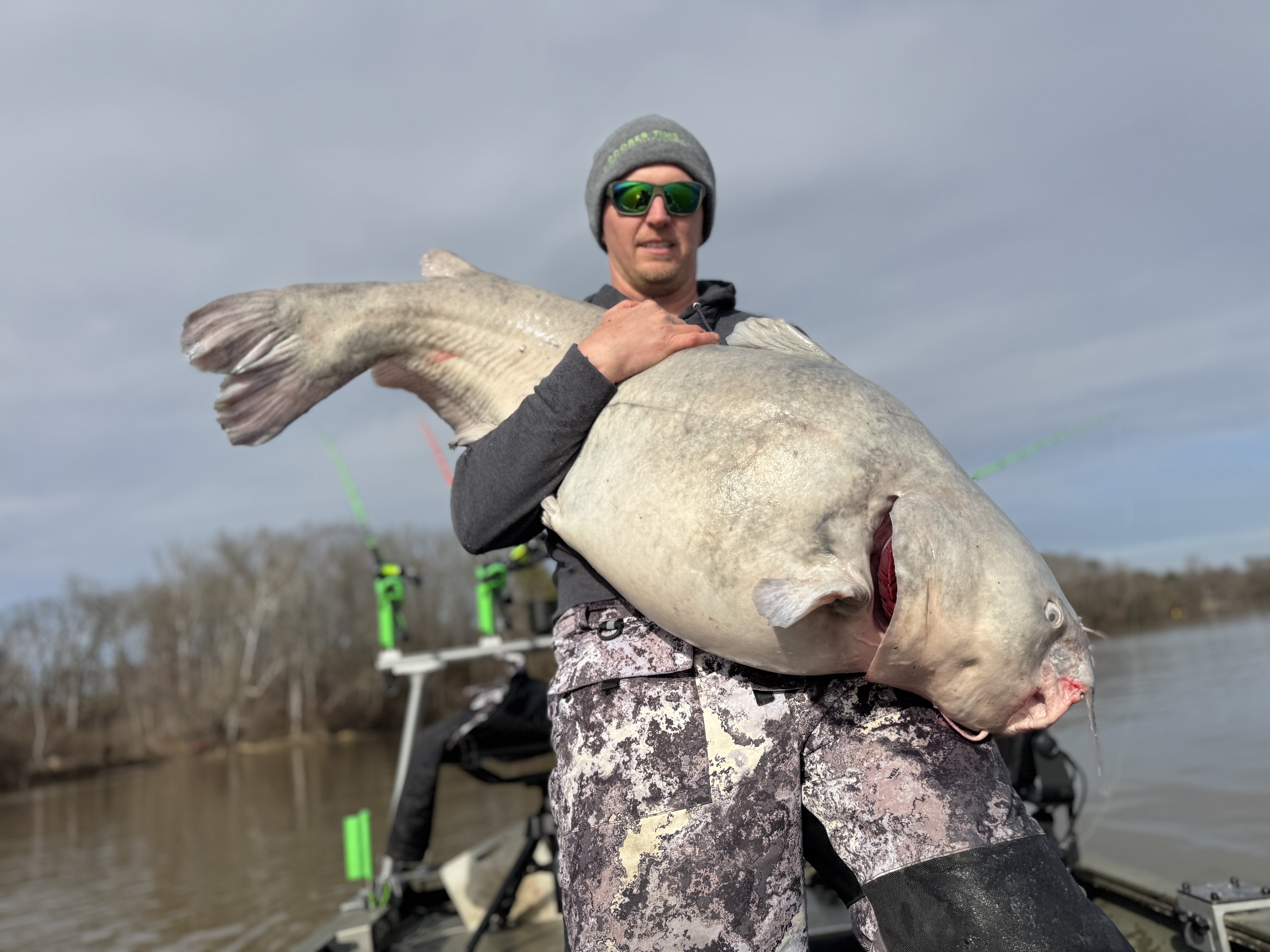
As the Virginia summer sets in, a major shift happens beneath the surface of the James River. For many anglers, "the spawn" is a word that brings both excitement and a bit of mystery. At Goober Time Guide Service, we believe that understanding the biology of the river isn't just about catching more fish—it's about being good stewards of the incredible trophy fishery that winds through Virginia.

If you are planning a trip between mid May and early June, here is everything you need to know about the James River catfish spawn, our conservation philosophy, and the diverse fishing opportunities that open up during this unique season.
Understanding the Blue Catfish Spawn
Blue Catfish are the undisputed kings of the James, but even kings need privacy. When water temperatures hit that 70°F to 75°F mark, the big blues begin to shift their behavior.
The Migration: Trophy blues move out of their deep winter holes and main channel feeding grounds. They head toward smaller tributaries, backwaters, and areas with heavy structure like log jams, undercut banks, or rock piles.
The Nesting: Male Blue Catfish are the primary caretakers. They find or "sweep out" a nest in a dark, protected spot. Once the eggs are laid, the males stay behind to guard the nest and the fry from predators.
The Bite: During the actual spawn, the bite for trophy-sized fish often slows down significantly. The fish are focused on reproduction rather than feeding with males often not eating for weeks on end. This IS NOT the time to put more stress on them by targeting them. The big females are often in a state of "recovery" shortly after spawn and should be left alone to recover.

Don't Forget the Flatheads
While the blues are the main event, the Flathead Catfish spawn follows a similar, though often slightly later, timeline (typically June through July when water hits 75°F to 80°F). Flatheads are solitary ambush predators. During the spawn, they tuck into the thickest cover imaginable—think massive log piles and rocky crevices in the swifter water and rapids up-river.

Our Spawning Season Philosophy: Leave the Trophies Alone
At Goober Time Guide Service, we have a firm stance on trophy conservation. We believe in leaving the trophy-sized fish alone during the peak of the spawn.
Trophy Blue Catfish are the primary breeders. Catching a 50+ pound fish off a nest doesn't just stress the fish; it leaves the nest vulnerable to predators like other catfish, bass, sunfish and small eels. To ensure that the James River remains the world-class trophy destination it is today, we pivot our goals during this window to protect the future of the species.
Conservation First: We enforce a selective harvest policy year-round (releasing all catfish over 10 lbs), but during the spawn, we actively avoid targeting the big breeders to let them carry out their natural timeline in peace.
New Season, New Goals: What We’re Catching Instead
Just because the trophy blues are busy doesn't mean the fishing isn't fire. The spawning window is actually one of the most versatile times to be on the water with us. We shift our focus to high-action trips and multi-species adventures:
1. Flathead Trips in the Rapids
When the water warms up, we shift our focus up-river into the swifter water and rapids where there's far less fishing pressure since boats cannot reach these stretches. This is a great time of year to target flathead catfish, carp, and smallmouth bass. All of these species are hard fighting, and hookups in the current are an absolute adrenaline rush.
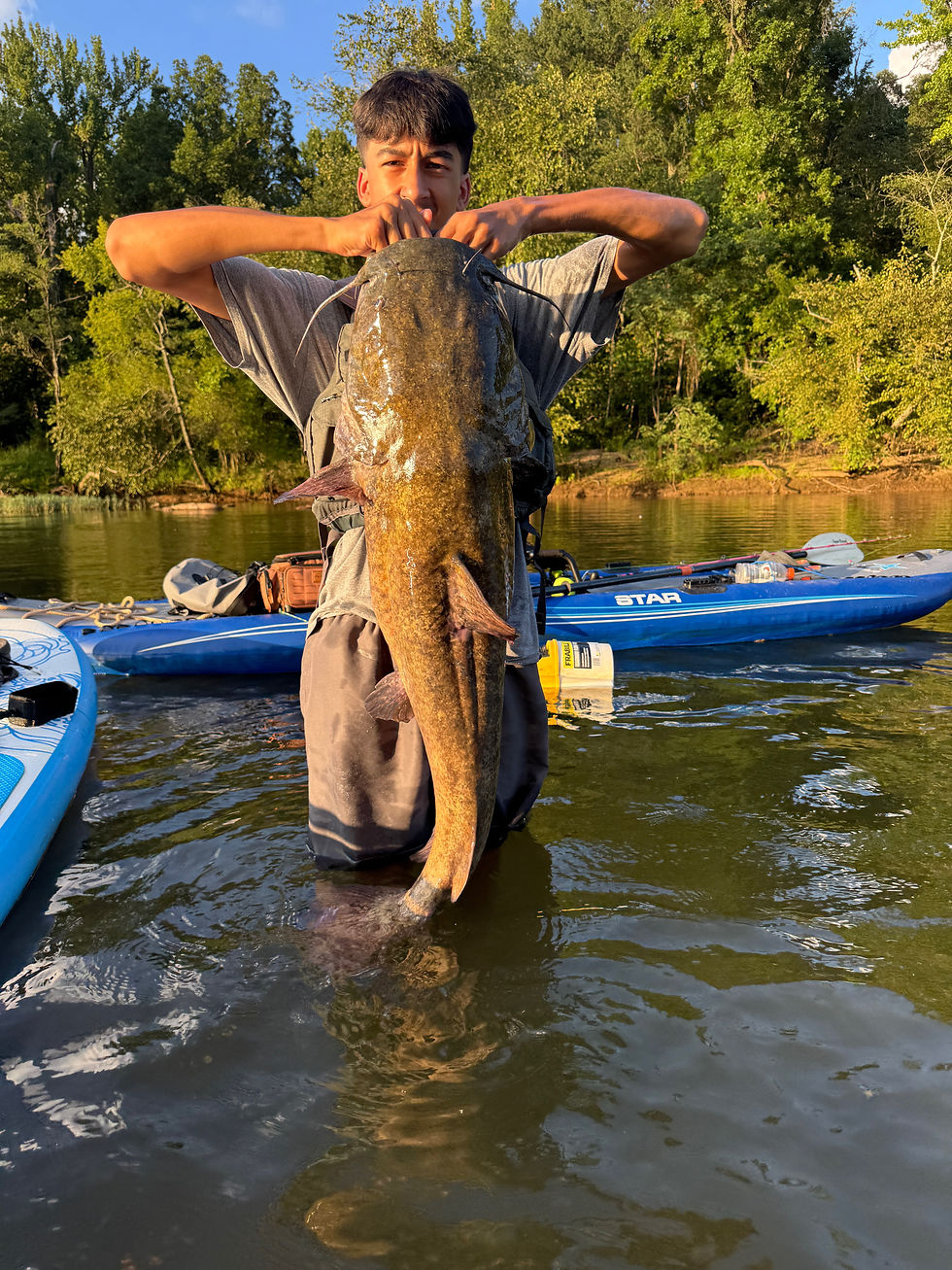
2. Multispecies "Meat in the Freezer" Trips
If you're looking to take home some dinner, this is the time. We focus on:
Small Blue Catfish: While the larger catfish slow down, the smaller "eater" sized Blue Catfish (under 10 lbs) are abundant and delicious.
We often run these trips with light tackle to keep the fight exciting and challenging.
Smallmouth Bass: The rocky stretches of the James offer some of the best Smallmouth fishing in the region during the late spring.
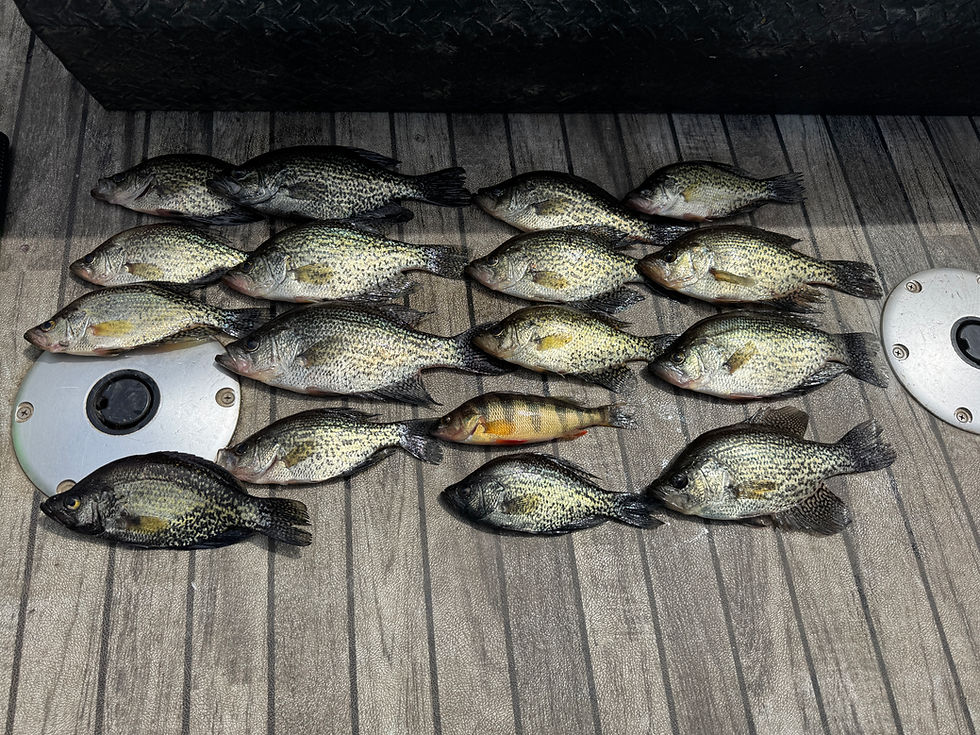
White Perch & Crappie: Great for kids and families who want constant rod-bending action.
3. The James River Expedition
This is the perfect time of year for our kayak, canoe, paddleboard, and raft-based trips. These low-profile vessels allow us to get into the shallow, rocky areas where the big boats can't go, putting you right on top of the Smallmouth and Flathead action in the most scenic parts of the river.
Book Your Spawning Season Adventure
The James River is a dynamic ecosystem that changes every week. Whether we are chasing Flatheads in the rocks or filling the cooler with "eaters," a trip with Captain Dan is about more than just a tight line—it’s about experiencing the river the right way.
Ready to get on the water? Check our availability and book your James River Charter here!

Captain Dan Szajta is a USCG Master and IGFA Captain who brings a unique, analytical edge to the waters of Central Virginia. When he isn’t guiding clients to "river monsters" on the James River, Dan serves as a high school math teacher—a background that fuels his precision-based approach to angling. By combining formal maritime expertise with a teacher’s knack for breaking down complex patterns, Dan specializes in breaking the code on trophy Blue Catfish, Flathead Catfish, and Smallmouth Bass for anglers of all skill levels.
Operating Goober Time Guide Service, Dan offers a versatile experience tailored to the water's demands. Whether you are hunting giants from his fully equipped main vessel or launching a kayak or raft to reach remote, low-pressure fisheries, his mission is to provide more than just a day on the water. Every trip is an opportunity to learn the "why" behind the bite, blending high-energy adventure with the technical insights of a true multi-species specialist.
Captain Dan Szajta
USCG Master Charter Captain
804-592-0456
*Contents of this article may not be reproduced without the prior consent of Goober Time Guide Service, LLC.


Comments