
The Ultimate Guide to Fall Trophy Blue Catfish on the James River
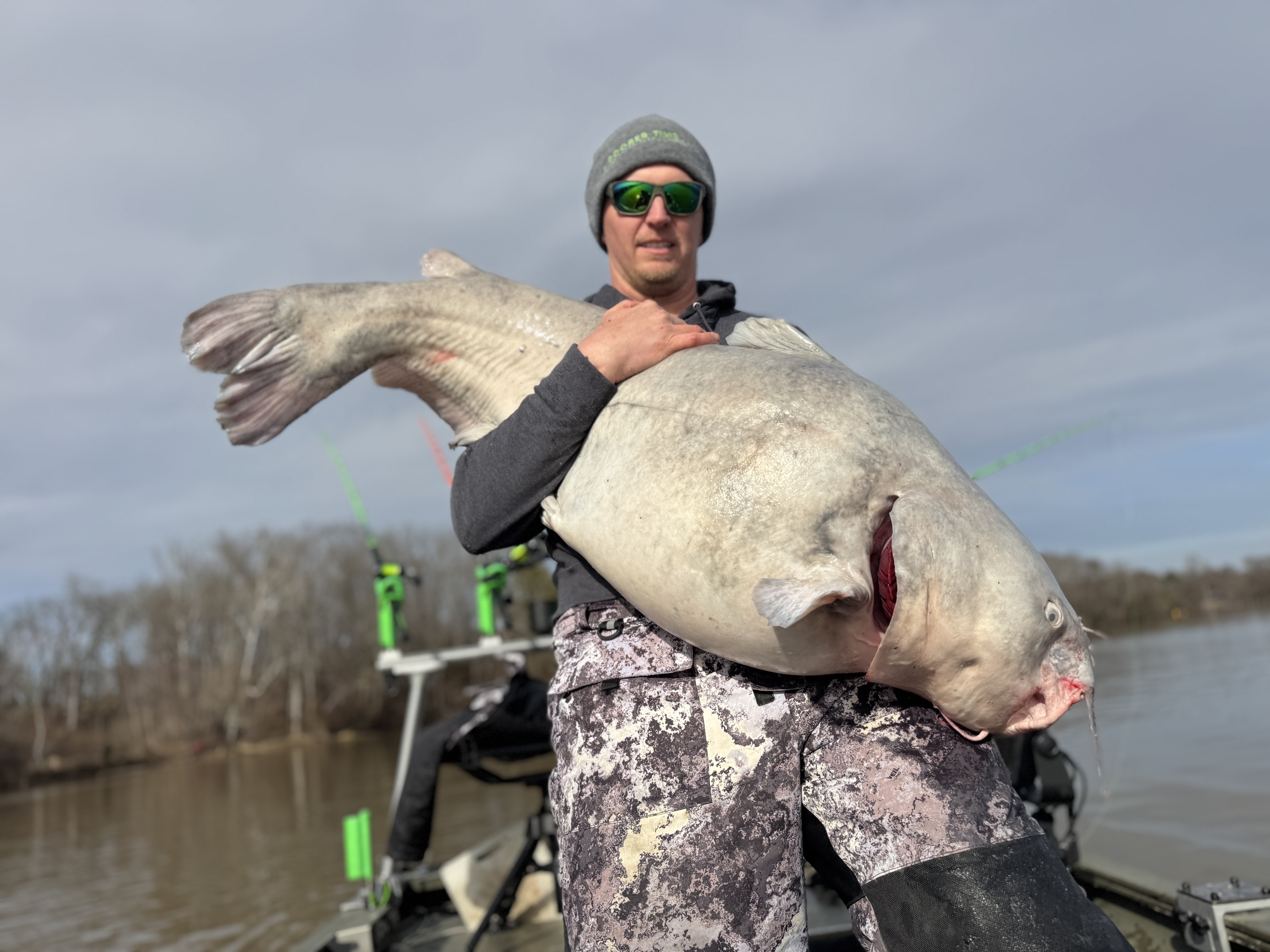
As autumn settles across Central Virginia, water temperatures begin their steady drop from summer peaks, triggering one of the most explosive feeding windows of the entire calendar year. For big-game freshwater anglers pursuing trophy blue catfish (Ictalurus furcatus), the tidal James River—stretching from the fall line at Richmond down through Hopewell, Dutch Gap, and the mouth of the Chickahominy—stands as an undisputed world-class fishery.

During fall, adult blue cats transition out of their dispersed late-summer holding patterns and begin gorging aggressively on oily baitfish to build vital fat reserves before winter forces their metabolism to slow. Whether your goal is landing your first 30-plus pounder or setting hooks into a 70+ pound river monster, success depends on mastering seasonal water temperature transitions, tidal mechanics, precise boat positioning, fresh bait preparation, and heavy terminal rigging.
1. Seasonal Water Temperature Breakdown & Fish Movement
To consistently locate trophy catfish from September through November, you must track bait movement. As crisp autumn nights chill the water column, massive schools of gizzard shad, threadfin shad, and juvenile white perch cluster near river channel drop-offs, feeder creek mouths, and expansive mud flats.

The fall season breaks down into three distinct thermal phases:
Phase | Water Temp Range | Primary Holding Structure | Primary Technique |
Early Fall Transition | 75°F – 65°F | Shallow flats (10–25 ft), channel edges, wing dams | Planer board drifting / shallow night anchoring |
Mid-Fall Heavy Feed | 65°F – 55°F | Creek mouths, tidal funnels, ledge drop-offs | Tidal creek mouth anchoring on outgoing tides |
Late Fall Staging | 55°F – 45°F | Deep scour holes (30–60+ ft), outside river bends | Heavy static anchoring in deep water structure |
Phase Details
Early Fall Transition (75°F to 65°F): High metabolic rates keep fish mobile. Giant blues actively forage across broad 10- to 25-foot flats during low-light hours and overcast days, moving into 30-foot channel trenches when the sun is bright.
Mid-Fall Heavy Feed (65°F to 55°F): This is peak feeding action. Bait density reaches its annual high at tributary intersections. Blue catfish position downstream of current breaks, waiting for tidal flow to push bait directly over structure.
Late Fall Staging (Water Temps Below 55°F): As water cools toward winter levels, blue cats drop into the deepest available water—often 30 to 60+ feet deep in gravel-mine pits, bridge pilings, and scour holes created by hard river bends.
2. Navigating Tidal Mechanics & Flow Dynamics
The tidal James River fluctuates by 3 to 5 feet twice daily. Water movement drives catfishing success far more than the time of day.
The Tidal Golden Rule: Motion creates feeding lanes. Static water during slack tide generally slows down the bite, whereas moving water forces baitfish to drift uncontrollably past waiting catfish.
The Outgoing Tide: The most productive tide phase across shallow flats and creek mouths. As water drains out of marshes and tributary creeks, it concentrates bait into narrow outflow channels, washing scent trails straight into main river holding zones.
The Incoming Tide: Ideal for deep channel bends, submerged river ledges, and barge pits. Incoming water pushes scent upstream and forces fish up against steep channel walls.
Slack Water Strategy: When water stops moving for 30–45 minutes around high and low tides, bites stall. Use slack tide to catch fresh bait, relocate, or re-rig gear.

3. Top 3 Fall Strategies for James River Trophy Blues
Strategy 1: Static Anchoring on Deep Structure & Scour Holes
When water temperatures drop below 60°F, anchoring above deep water structure yields giant fish. Focus on depths of 30 to 60+ feet near outside channel bends, sunken barges, or gravel trenches.
Rigging & Boat Positioning: Drop your main anchor well upstream of your target structure. Pay out enough anchor rope (scope ratio 5:1 minimum) to drift down-current and lock into place 50 to 70 feet upstream of the ledge or hole.
Rod Array: Deploy a 4- to 6-rod spread fan-cast behind the boat. Stagger bait distances so two lines sit directly on top of the drop-off, two sink to the deepest bottom of the scour hole, and two sit along the shallow lip.
Patience Standard: Give a deep anchor set 30 to 45 minutes. If you do not register markable fish on sonar or get a bite within this window, pack up and move to the next structure.

Strategy 2: Intercepting Tributary Funnels on Outgoing Tides
Tributaries such as the Chickahominy River, Appomattox River, Bailey Creek, and Herring Creek act as massive feeding funnels in mid-fall (55°F–70°F water).
Setup: Position your boat along the 12- to 25-foot drop-off edge right where the tributary mouth empties into the main river channel.
Execution: Cast baits up toward the shallow creek mouth or along the current seam. Allow the current to pull your bait down to the drop-off where giant cats lie in wait.

Strategy 3: Controlled Drifting & Dragging Channel Flats
When early fall fish scatter across expansive 15- to 35-foot mud flats, static anchoring can miss roaming schools. Controlled drifting lets you cover miles of prime habitat.
Drift Speed Control: Maintain a speed between 0.5 and 0.8 mph using drift socks off the stern or bow-mounted electric trolling motors. Moving slower than 0.4 mph risks snagging, while drifting faster than 1.0 mph pulls baits away before a fish can strike.
Planer Board Deployment: Spread lines out laterally by using inline catfish planer boards to push baits 50 to 100 feet away from the boat path, preventing boat noise from spoofing shallow fish.

4. Fresh Bait Masterclass: Catching & Preparing Target Forage
Trophy blue catfish are scavengers when young, but once they top 30 pounds, they become apex predators that prefer fresh, oily fish. Frozen or artificial baits will rarely trigger strikes from 50+ pound James River blues.
Target Bait Species & Collection Tactics
Gizzard Shad (The Gold Standard): Dense in muscle and rich in natural oils. Catch them using a 7- to 10-foot cast net around warm-water discharges, boat ramps, and tidal creek mouths during early morning hours.
White Perch: A hardy, extremely oily panfish native to the tidal James. Catch them using sabiki rigs or small jigs tipped with bloodworms/nightcrawlers near structure (check Virginia DWR size and bag limits before harvesting).
American Eel: Unmatched for durability in heavy currents. Fresh, dead cut-eel releases a scent trail that lasts for hours.

Precision Bait Cutting Techniques
Head Cuts: Cut off the head just behind the gill plates of a 10- to 12-inch gizzard shad. The head piece is dense, resists small pest fish, and produces a steady scent trail—making it the top choice for 50+ pound trophy fish.
Body Chunks & Cross-Cuts: Slice 1.5- to 2-inch chunks through the body to expose the oily stomach pocket and spine. These chunks release an instant blood trail, triggering fast reaction bites.
Scoring & Slashing: When using whole white perch or small shad, trim off the tail fin to prevent bait spin in heavy current, and slice deep diagonal slashes along the sides to release oils.
5. Heavy-Duty Gear & Terminal Tackle Specifications
Landing an aggressive 60-pound blue catfish out of a 4-knot tidal current in 40 feet of water demands heavy, highly specialized equipment.
Rod, Reel, & Mainline Configuration
Rods: 7'6" to 8'0" Medium-Heavy to Heavy action catfish-specific composite rods with moderate-fast tips and parabolic backbones. A forgiving tip allows circle hooks to load smoothly without pulling away from the fish.
Reels: High-capacity 30- to 40-size baitcasting reels featuring durable brass gearing, bait clickers, and smooth carbon fiber drag systems rated for at least 25 lbs of max drag.
Main Line: 65 lb to 80 lb braided main line. Braid offers zero stretch for solid hooksets at deep depths and cuts through heavy current without creating excessive line bow.

Terminal Rig Assembly
Component | Specification | Technical Function |
Leader Material | Provides high abrasion resistance against river debris, log jams, and sharp mouth pads | |
Hooks | Designed to roll into the jaw corner automatically; snell knot mounted for 100% force transfer | |
Sinker Slide / Swivel | Prevents line twist from tidal current and allows fish to take line without feeling weight resistance | |
Weights | 6 oz to 12 oz Flat No-Roll or Bank Sinkers | Holds bait stationary on muddy or rocky river bottoms against 3+ knot current |
Peg Floats | Lifts bait 12–18 inches off the river bed to keep it in the fish's visual field and clear of mud |
6. Electronics & Sonar Strategy
Modern side-imaging and down-imaging sonar are vital tools for finding fall blues on the James River.
Locating Structure: Use Side Imaging at 455 kHz or 800 kHz set to a 100-foot range to scan river edges for submerged trees, wing dams, drop-offs, and scour holes.
Identifying Fish Signatures: Blue catfish appear as thick, dense "arch" signatures or distinct solid shadows lying along the bottom contour or resting right behind current breaks.
Bait Detection: Look for thick clouds or balls of bait on down-scan. If a deep hole lacks bait markings on sonar, move until you find active bait schools.

7. Conservation, Fish Handling, & Selective Harvest
The tidal James River remains an elite trophy catfish destination due to conscientious conservation practices by local anglers and guides.
The Power of Selective Harvest: Smaller blue catfish under 10 pounds (under 24 inches) are plentiful, clean, and make exceptional table fare. Harvesting smaller fish helps balance the food web and reduces pressure on bait populations.
Protecting Breeding Giants: Blue catfish over 30 pounds require 15 to 25+ years to reach that size. They serve as the primary breeding stock for the river. Practice Catch, Photo, Release (CPR) on fish over 20 pounds.
Safe Handling & Air Bladder Care:
Horizontal Support: Always support a heavy catfish horizontally with one hand or gripper in the mouth and the other under the belly. Holding large fish vertically by the jaw can severely damage their vertebrae and internal organs.
Use Rubberized Nets: Large rubber-mesh landing nets protect the fish's natural slime coat.
Barotrauma Prevention: When pulling fish from deep water (40+ feet), reel them in at a steady, moderate pace to allow their air bladder to adjust. If a fish floats upon release, revive it alongside the boat until it swims down under its own power.

Ready to Hook Into a River Monster?
Book an unforgettable trip with Goober Time Guide Service to experience world-class, fully guided fishing charters across Central Virginia's premier trophy waterways.

Captain Dan Szajta is a USCG Master Captain and IGFA Captain who brings a unique, analytical edge to the waters of Central Virginia. When he isn’t guiding clients to "river monsters" on the James River, Dan serves as a high school math teacher—a background that fuels his precision-based approach to angling. By combining formal maritime expertise with a teacher’s knack for breaking down complex patterns, Dan specializes in breaking the code on trophy Blue Catfish, Flathead Catfish, and Smallmouth Bass for anglers of all skill levels.
Operating Goober Time Guide Service, Dan offers a versatile experience tailored to the water's demands. Whether you are hunting giants from his fully equipped main vessel or launching a kayak or raft to reach remote, low-pressure fisheries, his mission is to provide more than just a day on the water. Every trip is an opportunity to learn the "why" behind the bite, blending high-energy adventure with the technical insights of a true multi-species specialist.
Captain Dan Szajta
USCG Master Charter Captain
804-592-0456
*Contents of this article may not be reproduced without the prior consent of Goober Time Guide Service, LLC.


Comments