
Catching Gizzard Shad with a Gill Net: Floating vs Sinking
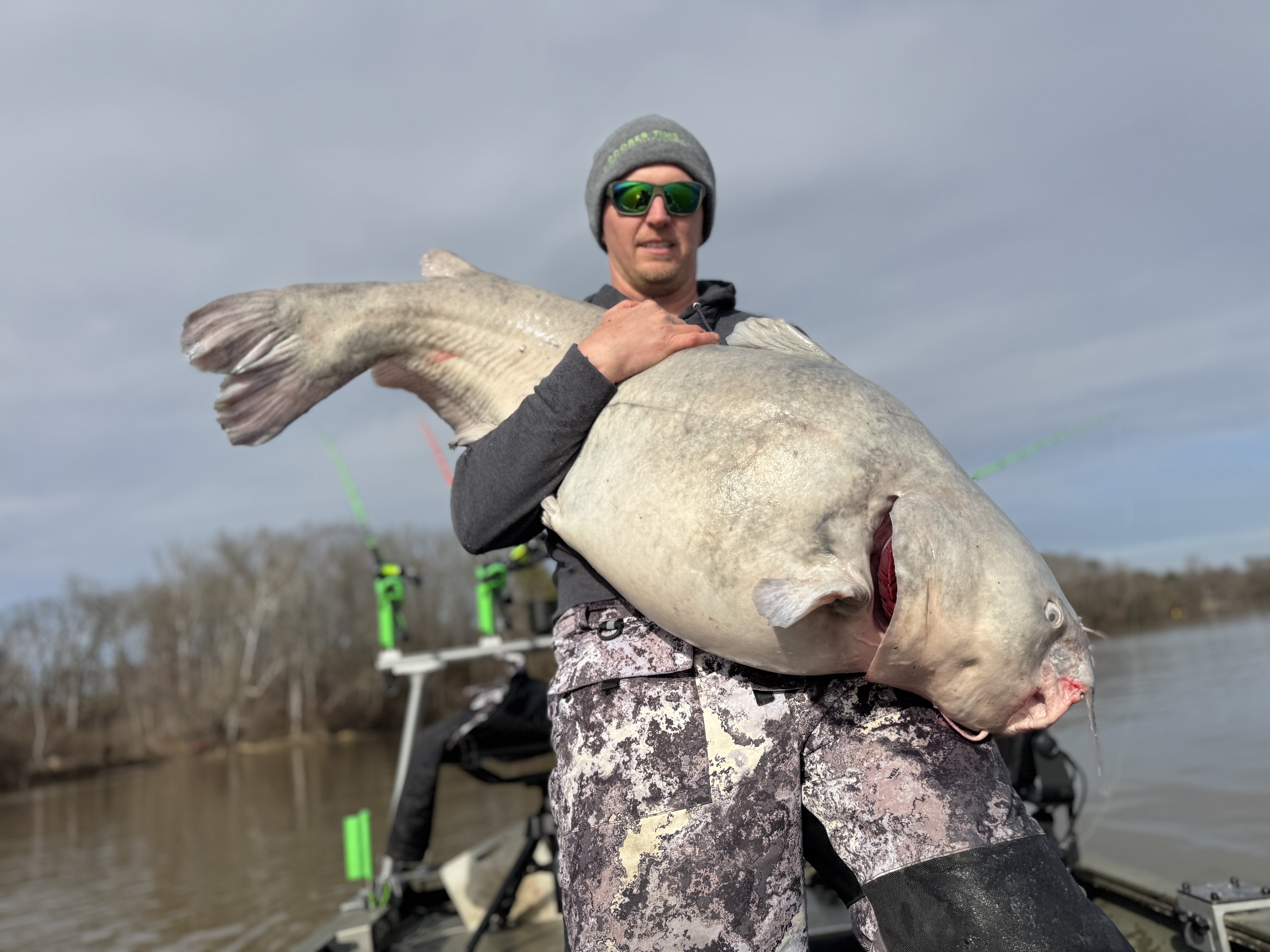
If you’re hunting for trophy Blue Catfish on the James River, you already know the golden rule: Fresh bait is king. While there are plenty of options, the Gizzard Shad is the undisputed heavyweight champion of baits.

Depending on the season, catching gizzard shad isn't always as simple as throwing a net and hoping for the best. To be successful year-round, you have to understand the gear. Specifically, you need to know when to reach for a floating gill net versus a sinking gill net.
At Goober Time Guide Service, we spend hundreds of hours on the water every year chasing bait. Here is our breakdown of how to choose the right net to keep your bait cooler stocked, regardless of the season.
The Floating Gill Net: Your 3 season Workhorse
For most of the year—Spring, Summer, and Fall—the floating gill net is your best friend.
As the water warms up, Gizzard Shad become highly active in the shallow mud flats. You’ll often see them "flicking" on the surface in the early morning or evening. During these months, shad are pushed into the shallows and flats to spawn or feed.
Why it works: The top line of the net is equipped with highly buoyant floats that keep the mesh suspended right at the surface.
The Advantage: It’s easier to deploy and retrieve in shallow water or around structure without snagging the bottom.
When to use it: When you see surface activity or when water temperatures are above 50-55°F.
Where to use it: Set the net where you see bait activity or where you mark baitfish usign your sonar. Often time, on the James River, the best locations are shallow mud flats, near deeper water, away from the heavy current flow.

Spring, Summer, and Fall, we recommend a 50-100 foot floating gill net which can be purchased HERE. All our nets come rigged and ready to fish with floats, weights, and a storage tote. Our nets come rigged exactly how we run them on our guide boat.
The Sinking Gill Net: Winter Game Changer
When the winter weather hits the James River, the bait game changes entirely. As water temperatures plummet, Gizzard Shad move out of the shallows and retreat into the deep river channels and holes where the water temperature is more stable.
If you try to use a floating net in January, you’ll likely go home empty-handed because the fish are 15 to 30 feet below the bottom of your net.
Why it works: Sinking nets (also called "lead-down" nets) have heavier weights and no buoyant floats along the top line, allowing the entire rig to drop through the water column and stand up at the bottom of the riverbed.
The Advantage: It puts the mesh exactly where the shad are "huddled" during the winter months.
The Challenge: These nets need to have long lines attached to the top line so your end buoys can reach the surface.

In the Winter, we recommend a 50-100 foot sinking gill net which can be purchased HERE. All our nets come rigged and ready to fish with floats, weights, and a storage tote. Our nets come rigged exactly how we run them on our guide boat.
Comparison at a Glance
Feature | Floating Gill Net | Sinking Gill Net |
Best Seasons | Spring, Summer, Fall | Winter |
Bait Depth | 0 – 10 feet | 15 – 50+ feet |
Primary Target | Surface-feeding/Spawning shad on mud flats | Deep-hole/Dormant shad |
Recommended Length | 50-100 ft | 50-100 ft |

Important Legal Disclaimer: Gill Net Usage
The use of gill nets is subject to strict and complex regulations that vary significantly by state, county, and specific body of water. In many jurisdictions, gill netting is heavily restricted or entirely prohibited for recreational anglers to prevent overfishing and the accidental capture of protected species (bycatch). Because laws regarding mesh size, net length, soak times, and required permits are subject to frequent changes—and because illegal use can result in severe penalties, including heavy fines, equipment confiscation, and criminal charges—all anglers must independently verify current local regulations before possessing or deploying a gill net.
How to Check Your Local Regulations
To ensure you are fishing legally and ethically, please follow these steps:
Contact Your State Agency: Visit the official website of your state’s Department of Natural Resources (DNR), Fish and Wildlife Service, or Marine Resources Commission.
Search for "Nongame" Gear Rules: In many areas, gill nets are classified under "nongame fishing devices" or "recreational gill net licenses" rather than standard hook-and-line regulations.
Verify Specific Waterway Restrictions: Regulations often differ between "inside" coastal waters, tidal rivers, and inland freshwaters. Some zones may have seasonal closures to protect migrating species.
Check Permit Requirements: Many regions require a specific gill net tag or a non-commercial netting license in addition to a standard fishing license.
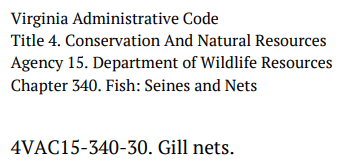
Note: This information is provided for educational purposes only and does not constitute legal advice. Always rely on official government documentation as the final authority on fishing laws in your area.
Why Experience Matters on the James
Catching bait is often the hardest part of a fishing trip. On the James River, tides, currents, and debris make net placement a science.
When you book a trip with Goober Time Guide Service, you aren't just paying for a boat ride. You’re hiring a guide who knows exactly where the bait is holding based on the daily conditions. We come prepared with the right gear—whether that’s a floating net for a humid July morning or a sinking net for a freezing February sunrise—so you can spend your time fighting fish, not hunting bait. We're also happy to teach you how to use a gill net and where to place it to make your future bait runs more efficient.
Ready to Hook a Monster?
Don't let the struggle of catching bait keep you off the water. Let us handle the hard work while you enjoy the best Catfishing Virginia has to offer.

---------------------------------------------------------------------------------------------------------------------------
Goober Time Guide Service offers premier guided fishing experiences throughout the James River and key bodies of water across Central Virginia. We specialize in multi-species excursions, targeting trophy Blue Catfish, Flathead Catfish, Smallmouth Bass, Striped Bass, and Crappie.
Our versatile fleet includes a fully-equipped main boat for full-group charters, as well as specialized kayaks, paddleboards, and whitewater rafts to access remote waters and low-pressure fisheries. Furthermore, we offer exclusive light-lining charter trips for elite anglers seeking the ultimate technical challenge and potential record-breaking catches.
Contact us to consult on your group’s goals, and we will expertly design a tailored fishing adventure to exceed your expectations.
Captain Dan Szajta
USCG Master Charter Captain
804-592-0456
*Contents of this article may not be reproduced without the prior consent of Goober Time Guide Service, LLC.


Comments